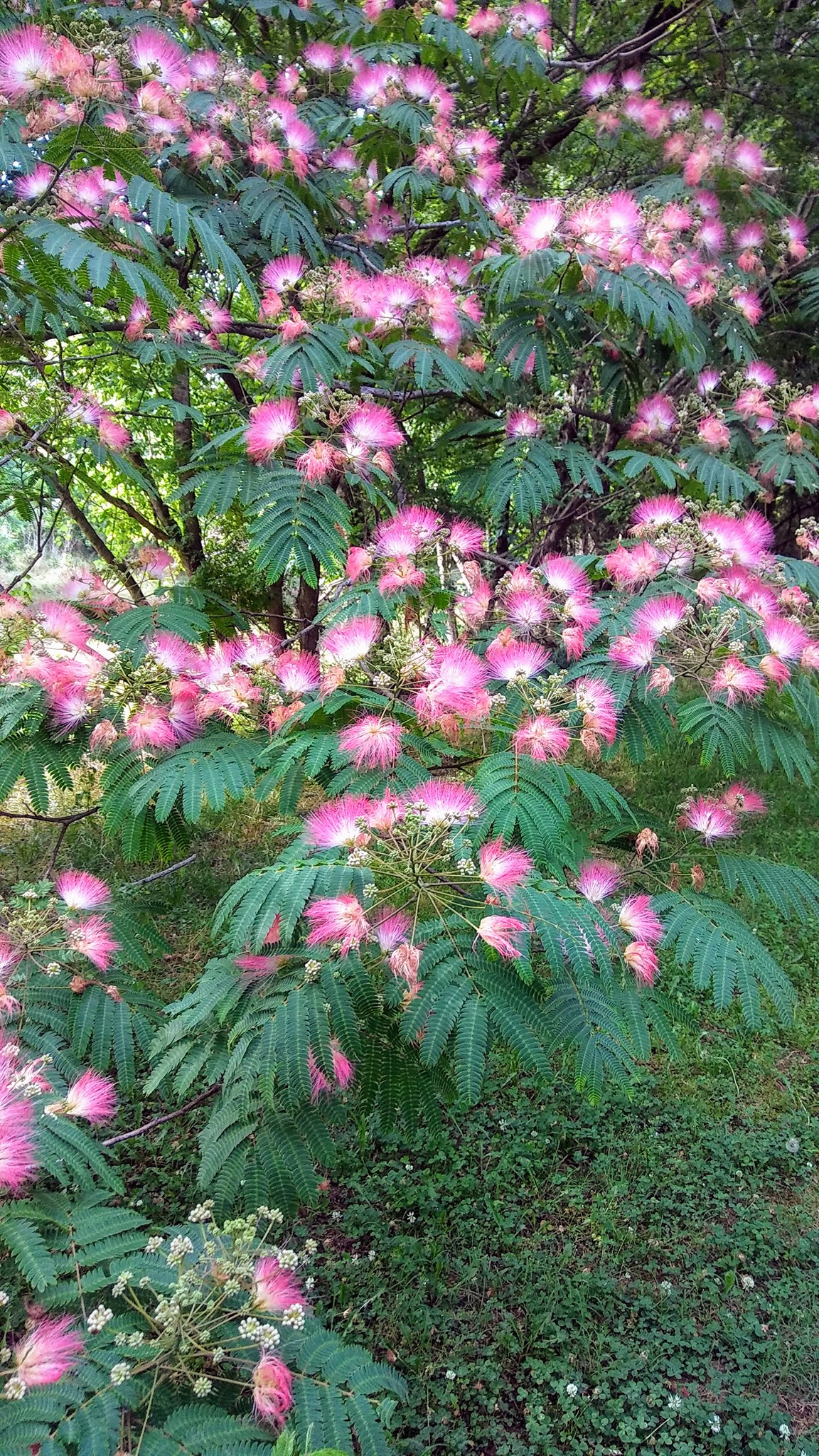
Mimosa Tree in Bloom

Sometimes things just fall into place, despite our best efforts!

This is a totally unfiltered / non-photoshopped image of a mimosa tree in bloom from last year (2020) made with my cheap smartphone and hardly any thought went into composing the photo.

Why did it turn out well? Of course, it isn’t perfect, but for the amount of effort, the equipment and no post-processing, it was surprisingly good.

I think what makes it work is

1 – Being in the right place, compositionally speaking, without knowing it. Serendipity.

2 – The sun, not apparent in this photo, was going in and out of the cumulus clouds. At the shutter click, the pink blooms were particularly highlighted by bright light. This gave the photograph the optimal lighting at that instant.

Posted in Photoblog | Tagged , | Leave a comment

Starting a Photoblog!

I’ve decided to start doing a photoblog. That’s in addition to my usual blog topics of Learning the Banjo, Photography Techniques, Trail-blazing, and Urban Studies. Typically, I post one of these existing topics each Thursday morning at 6 am, central time in the U.S. For my photoblogs, I will just be posting them as they come mostly – no set time for scheduling the posting of them.

I should also mention the inspiration for doing a photoblog comes from having followed Vova Zinger’s photoblog for a while now. His blog is a basic concept of displaying a photo on a regular basis, often once a day. He seldom has commentary on the photos, but I think that his blog works very well and I look forward to seeing his photography. One thing I do intend to do a bit different is to try to often tell a bit of background or a bit of the technicalities of the photo. After all, I do think I’m still more of a technician than an artist.

Posted in Photoblog, Photography | Tagged | Leave a comment

The Sysop Revisited

The sysop – that’s a word you seldom hear anymore. At one time, it occupied the same status as, for instance, the modern day phrase ‘influencer’. Different definitions, of course. A sysop was short for a systems operator, sort of like a system administrator (an ‘admin’ to most of us today). A sysop was the person who ran a bulletin board system, or BBS.

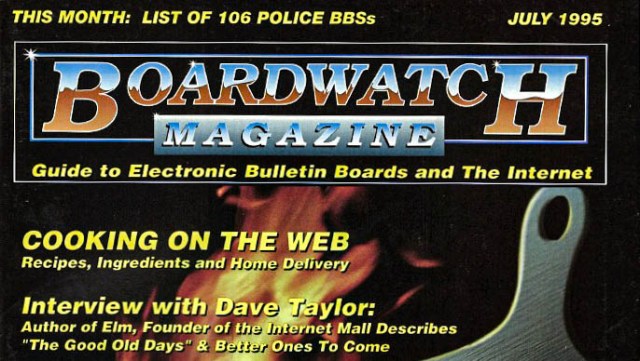
Back in the 1990s, just prior to the advent of widespread Internet access, much of what is now known as social media was carried out on much more technically challenging bulletin board systems – BBSs. Vendors such as Mustang Software and Galacticomm put out such products as Wildcat! and The Major BBS. They would run over standard telephone lines, which meant that you could only have as many people online concurrently as the number of phones lines the BBS had – and more importantly, the number of phone lines the sysop paid for! Most BBSs had only one or two lines. I knew of one very large and well-known BBS that had 16 telephone lines! And Boardwatch was the magazine to subscribe to. I still have a couple of issues, kept for memories. The image above from 25+ years ago is from one of mine boxed up in the attic.

Back then I was back in school again getting my Optics degree at UAHuntsville. At the time it was a dream of mine to start my own optics company making telescope optics. But I also wanted to be a Sysop, sitting there running my own BBS. Watching all the technical and social details, plus taking care of my own marketing,  promotions and system programming. Maybe even making it successful enough to make a living at it.

But never has an entire industry seen a more rapid decline than that of BBSs in the face of the approaching Internet. Fortunately, most everyone in the industry had the skills and knowledge to quickly transition to the new paradigm for global communication, leaving BBSs now as a distinct niche market.

For myself, I graduated, got a job, married, and settled into life. I pretty much didn’t give any mind to my notion of being a sysop for many long years. I might have recalled that earlier wish, just briefly, every couple of years.

Until just now!

You see, it dawned on me as I sit here, surrounded by multiple monitors. I have up on the laptop: my email, iTunes, Lightroom Classic (I do almost all my own photography and graphics). In various browser windows I’m monitoring traffic on my blog, checking out what others bloggers are posting. I’m looking at website stats, keyword trends (so I’ll be able to title and word my posts to better effect), plus other similar tasks.

In other words, I am doing the task of a sysop, only brought forward to today’s technology and unthought of opportunities from the 1990s. I guess it’s true that some thing stay the same amidst all the changes in life. A sort of self-fulfilled ideal.

Now if only it would make a living!

Posted in Internet & Social Media | Tagged , , | Leave a comment

Taxonomy of a Banjo Player

Image by mcmurryjulie from Pixabay

Elizabeth Barrett Browning (not William Shakespeare) wrote the Victorian sonnet that starts out:

How do I love thee? Let me count the ways.

In a fashion, we also have a plethora of sorts of banjo players. Or, to use a modern phrase and also to be more precise, we can call them all ‘banjo influencers’. I’m still not sure if I like that phrase or not, though. I’m old-fashioned, you see.

At any rate, it’s fun (well it is to me at least!) to categorize things. Here’s all the ways I can think of at the moment to split & lump banjo players according to various attributes. See what you think.

Style of Playing
There are modern styles, such as Scruggs, Melodic, and Single-String (AKA Reno) styles. Old-time styles would include Clawhammer, Frailing, and Two-Finger. And don’t forget 4-string banjos (Tenor and Plectrum) plus Banjo-Ukuleles and others that you play with a flat pick.

Musical Proclivity
Artist, Technician
Are you someone who is more creative, and perhaps you strive less for technical precision, or do you concentrate on techniques, using ‘fancy licks’ and perhaps leaning towards not being all that careful about whether it really fits into a song as long as it’s kosher for the current chord in a song? I call these the Artist and the Technician.

Role
Player, Songwriter, Luthier, Merchant
For lack of a better taxonomical name, I’ll call this a role; that is, what’s your main area of activity when it comes to the banjo. Are you mainly a banjo player, someone who creates songs, a craftsman who makes banjos, or a seller of banjos. Except for someone who is strictly a player, it’s hard to imagine someone not having overlapping roles here.

Job Title
Producer, Manager, Promoter, Impresario
Also for lack of a better name, these have more to do with the business side of the banjo and music as an industry. Again, some overlap, I’m sure. What is an impresario, you ask? I think it’s more of a British term meaning someone who sponsors or produces entertainment. So it might be a bit redundant here but I’ve listed it anyway.

Musical Skill Level
Beginner, Intermediate, Advanced, or Expert
These are pretty self-explanatory. By the way, I define a beginning banjo player as someone who can play Cripple Creek (or just any one song, really). Before learning their first song, it’s sort of like someone in a martial arts class with a white belt who has yet to earn their first belt (usually a yellow belt). The other distinctions are a bit fuzzier, and it’s usually after having advanced to the next level for some time and looked back that you can see where you are.

Now that we have all been duly categorized, we can get back to playing!

Posted in Banjos in General, Music in General, Philosophical Ramblings | Tagged , , | Leave a comment

Downtown Huntsville: Pre and Post World War II

I must confess the obvious here: I’ve been fascinated with downtowns and skyscrapers from an early age. I believe it was at the age of ten that my father took my brother and me to watch an Atlanta Braves game, back when Hank Aaron was just a few home runs away from breaking Babe Ruth’s record. Even then, Atlanta had many tall buildings, and I remember seeing the downtown Atlanta skyline from several miles away and being so amazed. As a young boy raised in Huntsville, Alabama in the 50s and 60s, I’d never seen such buildings!

Downtown Transformation
In the 1960s, downtowns were undergoing a transformation, and in retrospect not especially for the better. Urban renewal had not quite become the pariah of subsequent decades but it was on the way. Downtown Huntsville, still with some community and some activity in the 1960s as in older times, was on its way to a decades-long decline, as were many other downtowns. By the 1970s, I remember as a teenager who could now drive, going downtown and seeing absolutely no one walking around on weekends. They were at the new Parkway City (not a mall yet, just a strip shopping center) and other more sub-urban places, spending their time and their money.

Looking back even farther, cities, and more specifically downtowns, carry a different perception, meaning, and significance now than they did in Pre-World War II (WWII) America. Citizens approached cities and downtowns differently in the 1940s as compared to today. Here are some specifics for how the differences show up in Huntsville.

For one thing,  pre-WWII cities were much more compact than they are today. Suburban flight had yet to take off. Huntsville of 1950 was a small, compact town of about 15,000, but was about to welcome some 50 rocket scientists from Peenemunde, Germany by way of El Paso. We should also be aware that in 1950, a good number of folks now lived out in the county – south of what is now Drake Avenue! Eventually, that area became South Huntsville.
We all know how spread out Huntsville is now. As a matter of fact, it is the 29th largest city in the US in terms of its physical size (220 square miles!) Juxtapose that figure for area with population: currently the 29th largest city population-wise is Louisville, KY, with a population of 615,924 as of 2021, slightly above many well-known big cities such as Atlanta, Miami and Cincinnati¹. Huntsville, population 205,000 in 2021 and growing rapidly, did most of its early ‘growing up’ at the height of suburban sprawl. What that means for the look of our downtown is we have a city of 200,00 people with a downtown that was serving 15,000 citizens not that long ago in terms of development years.

So even though most cities in America have seen the effects of suburbia since WWII, few have seen it as wholesale as Huntsville. 

How Things Might Have Looked
In the golden age of skyscrapers in America (1900 to World War II roughly), life in a city was quite different from that in the later half of the century. Little suburbia and fewer automobiles meant a compact city and a dense population. If perchance Huntsville had experienced rapid growth just a couple of decades earlier, I think it would have altered the look of the city considerably.

For instance, if we were to measure the Huntsville of today, within the normal constraints placed upon a typical city of pre-WWII days, here’s what we might be looking at. Assuming our current population of about 205,000 for Huntsville proper, we also might be looking at much smaller neighboring cities and unincorporated areas: everyone lives in the city. So my rough estimate of the population of a modern, yet “pre-WWII defined” Huntsville: 275,000 to 300,000.

Now, about that downtown skyline. Since we are comparing a pre-WWII approach to city-building, I’ve put together what our city might look like if all our industries and headquarters were downtown rather than scattered throughout the city and arsenal. This list of skyscrapers makes a few assumptions.

1 – The average square footage per large building in major cities during the era was roughly 20,000 square ft.

BTW, the average height per floor, same period, was about 12.5 feet (more for offices, less for hotels and apartments).

2 – no light or heavy industry downtown, just offices, hotels and apartments.

3 – It is a rough back-of-the-envelope estimate that includes buildings from Redstone Arsenal, where some really big buildings reside.

Here’s an example of how I translate into a pre-WWII skyline:

The Boeing Gateway Center is easily twice the square footage per floor of typical 20th century hi-rises. 15 total stories times 2 =  30 stories if it were downtown in 1945

The entire area on the west side has so many modern very broad buildings; that’s the current architectural style. In general we might have 3 or 4 30-to-40 story buildings by my estimate. Shorter hi-rises of say 10 to 15-stories – an estimate of maybe 20 or 30 of them? Remember – back then, square footage per floor was tighter, and I am indeed including all areas in the metro in counting up these numbers.

So, I think those numbers say something significant about little ‘ol big Huntsville.

And ultimately, I do think a few taller downtown buildings would make for a more pleasing skyline.

¹Check out http://worldpopulationreview.com/us-cities/ for more population data.

Posted in Urban Studies | Tagged , , , , , | Leave a comment

Trail Building – Learning the Ropes

Note: This is one in a series of blogs on my volunteer work with the Land Trust of North Alabama (just ‘the Land Trust’ here). It details many of my experiences and observations creating and maintaining trails on the Green Mountain Nature Preserve (I’ll use GMNP for it here) in Huntsville. For the rest of this series, just click on ‘Trails’ in the top menu.

As I settled in to my role as a Trail Care Partner with the Land Trust, I was introduced to several of the folks who work at the Land Trust.

First was Brandon, the Land Stewart, one of the ‘boots-on-the-ground’ guys who do so much of the physical tasks, and also have a wealth of trail-building knowledge. We met to go over some preliminaries a week or two prior to the big work day when the Land Trust officially opened GMNP. It came as a bit of a surprise to realize that there were so many details in planning, financing, designing and lastly implementing and maintaining a trail. There are even a couple of concepts, such as the half-way rule (to be explained another day), that aren’t dead simple. In going over a lot of such details, I was definitely reminded of most any engineering discipline with both its theory and application. Was this simply the practice of ‘Trail Engineering’, I wondered?

During the initial work day on National Trails Day, the Land Trust was expecting, and got, a lot of volunteers; maybe 40 or 50. We even had a couple of vans to shuttle workers from the Madison County Nature Trail parking lot to the soon-to-be site of the GMNP trailhead and parking lot. While waiting for the next shuttle, I met Marie. At the time, I had no idea she was the Executive Director of the Land Trust, as well as a former City Planner with the City of Huntsville just after the tenure of Dallas Fanning. Mr. Fanning, one of Marie’s urban planning mentors, and an historical figure in Huntsville, is a topic for another day, as well. I struck up a conversation with her about mosquito repellants, and then on to the shuttle.

At the work site, I met Andy, the Land Manager, who was coordinating all the technical details. And that would be a good brief description of Andy’s overall task at the Land Trust as well; making sure all the technical details work out. As I would soon find out, it is impossible to plan exactly what work to try to accomplish until the actual number of volunteers are standing there ready to go. With so many there, Andy split us into at least four major tasks that I was aware of:

1 – Build a fence around the newly graveled parking lot. It was originally designed for about a dozen or so cars. It has since way over grown that.

2 – Build a kiosk at the parking lot / trailhead for the posting of information. This was a standard Land Trust design with shingled roof.

3 – Build East Plateau Trail, which Brandon had previously explored and flagged. I got on this team. We were actually in two teams for this, the only real trail-building for the day, with teams starting at either end of the new trail.

4 – Build a wooden bridge on Alum Hollow Trail over Turtle Creek. This is the creek that drains Sky Lake, the 17-acre lake in the Madison County Nature Trail. It is the main creek in the preserve. A group of Lockheed Engineering employees who volunteer with the Land Trust were tasked with this and so we call it the Lockheed Bridge.

So off we went to our respective jobs. Just past the parking lot, I met Hallie, whom I had emailed with when signing up. She was at a table gathering names and emails for the mailing list.

At the end of the work day, we had completed everything that Andy had set for us to accomplish. Hats off to the Lockheed team especially, as they had no idea that they were going to be designing AND constructing a 15-foot bridge until time to start. They did a great job.

So GMNP now had two trails: the original Alum Hollow Trail and the new East Plateau Trail. And I had met a few of the folks associated with the Land Trust and learned some more of the basics of trail building, with many more opportunities to come.

BTW, to this day this was the largest work day attendance I have seen at GMNP. In later years, we would occasionally see maybe 20 or 25, like when a Boy Scout troop would show up, but nothing like the 40 or 50 volunteers we had that day.

Posted in Trails | Tagged , , , , , | 2 Comments

Originators and Elaborators

I’ve been reading a book by the well-known photographer and author Tom Ang. In it, he prefaces a section on other famous photographers by comparing and contrasting originators and elaborators; terms defining, respectively, those who invent and pioneer, and those that improve and carry forward. Further, the vast majority of practitioners of whatever the field is, are elaborators.¹

I can’t help but make comparisons. Sometimes, I think that’s what I do best. Saying “This is like that” seems to be my first step in the process of understanding anything.

So it is with originators. In space exploration, we have Robert Goddard and Wernher von Braun among many others. In photography, there are pioneers such as Ansel Adams, Margaret Bourke-White and Stephen Dalton. In Bluegrass and banjo, they are like Earl Scruggs, Joel Sweeney, Bill Monroe, Bill Keith and Don Reno.

And so it is with elaborators; they are like you and me.

To draw further analogy from Tom Ang’s work, he states:

“The vast majority of published and exhibited photography is in fact the work of elaborators – superlative artists who were often inspired to take up photography by the originators and who have themselves become great artists in their own right.” ²

To me, that’s very inspiring. To think that just because I didn’t invent anything doesn’t mean I can’t make contributions to banjo playing, photography, or whatever it is.

1Tom Ang, Photography: History, Art, Technique (New York: DK Publishing, 2019), p.21.

2 ibid, p21.

Posted in Banjoists and Others, Philosophical Ramblings, Photography | Tagged , , , , , | 2 Comments

Why!?

… are the ‘Publish’ and ‘Save Draft’ buttons so easy to mix up in WordPress?

After close to 200 blogs, I finally did the unthinkable. I pressed the one when I thought I was pressing the other.

I’m pressing Publish on purpose now.


Posted in Uncategorized | 5 Comments

Urban Density in Huntsville

Last week, I blogged on Huntsville’s ‘Heaviest Corner’; the place in downtown Huntsville, Alabama that had the greatest density concentration. Since then, I’ve had a few additional thoughts, so I’d like to look further into that topic here. Here are some factors to consider when talking about urban density, especially in downtown Huntsville.
Not the Only Corner in Town
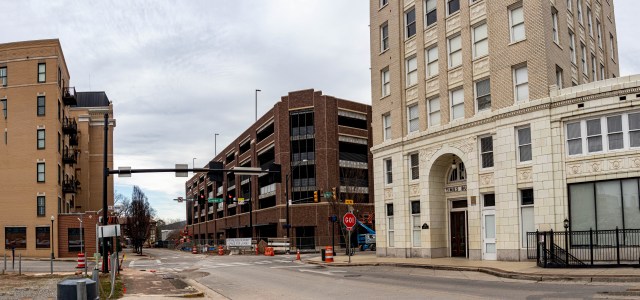
So the corner of Holmes Avenue and Greene Street isn’t the only place that has a greater sense of urban density about it these days. Much of Washington Street, as well as Clinton Avenue from the VBC to Washington Street, is starting to have a more downtown look to them. Looking ahead, so too will any place inside of City Center and Clinton at Jefferson when the Hyatt House is finished (but it has to get started first!)

Some folks might point to the corner of Holmes Avenue and Spragins Street for the heaviest corner in Huntsville, as that corner has the Regions Bank Building at 12 stories and the old Russel Erskine Hotel, also at 12 stories. However, that corner only has two buildings, not a completed set of four. That makes it feel more open, even though two corners are already built up. Plus, they only add up to 24 stories. However…if some developer ever puts up even a 6-story building on either of the vacant corners, then Clinton & Spragins would replace Holmes & Greene as the reigning champion, even with only three corners completed.

Corners versus Elsewhere
Many of these more dense places aren’t actually on a corner as Holmes and Greene is, so it is a bit of an odd comparison if we look at them in terms of a ‘heaviest corner’. For example, the Embassy Suites Hotel, the new Autograph by Marriott, and the Curio by Hilton all are in the middle of a block. Yet they add to urban density as much as a corner building does. So I guess what we are really talking about when we say a heavy corner is simply how built-up the immediate area appears to a person standing on the street at that spot, whether it’s a corner or not. 

Human Scale
Human scale is desirable in modern architectural design where it may be seen as being the opposite of an automotive scale. Think one big parking lot out front as opposed to several small parking lots in the back of each store. Human scale can also be defined as the distance from which someone on an upper story can still have a conversation with someone on the street. Usually this is no more than 3 stories¹. But for this specific purpose of perceived urban density, we aren’t concerned with transportation or with a sense of community. It is simply the perception of how built-up a specific spot is. So with that as a definition, I’d say we lose human scale when we start to get up very roughly around 20 or 30 stories. In other words, we can perceive a difference between a 5-story building and a 15-story building, but 40 and 50-story buildings are just way too tall to notice much difference between them close up.

Qualitative Perceptions
In other words, things that are not really measurable, like how busy the street is, are there shops on the ground level and possibly the second story, and the presence or absence of signs, posters, marquees and other such distractions, pleasant or otherwise. I believe the more of any of these elements tend to cause us to perceive a more dense environment.

Building Setbacks
Another less quantitative consideration in urban density is the setback of a building. More modern buildings may or may not have more of a setback. This was not the style in the 1930s and 1940s, such as we see locally in the Russell Erskine Hotel and the Times Building. A setback will reduce the feeling of density, which may be a good thing or a bad thing, depending on the goal of the designing architect.

Why Not Map Them all?
As a matter of fact, all this got me to thinking. How do other corners around the downtown area stack up in terms of being ‘heavy’? So I put together a brief map detailing all the corners with a combined value of 10 stories or more. Holmes & Greene seems to be the only one with substantial buildings on all four sides, so I’ve included others here with just two or three buildings. I’ve also included ‘non-corners’ in green numbers in the map below such as directly across from the VBC Arena entrance and inside City Center when it is finished. Green question marks, three of them, indicate future construction that we know about but don’t really have a firm idea of how dense they will look yet. Any surprises that you see here? Anything I’ve over-looked?

A few things are note-worthy here.

  • At  Jefferson & Holmes, I put a value of 11 as it is and a value of 20 if the Hyatt House eventually gets started on a new 9-story hotel at that site.
  • I’m assuming a new City Hall of 5 or 6 stories, depending on which corner you are looking at.
  • I’m also assuming a completed 7-story Hampton Inn & Suites across from the VBC.
  • The new Curio by Hilton isn’t on a corner, but I suppose I could add that one with a mid-block value of 12.
  • The Medical District is starting to get some density nowadays, as well as the newer part of downtown between the traditional downtown and the Medical District.
  • Clinton Row, the strip of Holmes Avenue between Washington and Jefferson, would make for a good experiment in density perception. It has most of the elements briefly mentioned above under ‘Qualitative Perceptions’. Does it seem more dense for all the ‘pleasant distractions’ there?
  • Only 3 corners currently have a value of 20 or more, but I’d watch Clinton & Monroe (currently 11) and Clinton & Spragins (currently 24), as they both have development potential.

¹Kenneth B. Hall Jr. & Gerald A. Porterfield, Community by Design (New York: McGraw-Hill, 2001).

Posted in Urban Studies | Tagged , , , , , , , , , , , , | Leave a comment

Huntsville’s ‘Heaviest Corner’

Here’s an interesting, obscure, fun fact for when Bank Independent completes its newly-announced 225 Holmes Avenue building in Downtown Huntsville, Alabama. You may be aware of ‘The Heaviest Corner on Earth’; the corner of 1st Avenue N and 20th Street in downtown Birmingham, Alabama. That’s the corner that has buildings of 10, 14, 16, and 19 stories, mostly built in the 30s and 40s it would appear from the architectural styles. No other corner is so ’heavy’ in Birmingham as that one, even though there are taller buildings downtown. When I worked as a research biologist at UAB years ago, I got to know downtown Birmingham very well as I would often catch the Crosstown South #9 bus near that corner. Many really big cities easily dwarf this corner, but that moniker has remained, I think because in a much bigger city, what would be the point? There would be so many corners with tall buildings on all four corners that the curiosity factor would be very watered-down. Plus, the human scale would have been long ago lost with the extreme tallness. Here in Huntsville, we have no ‘Heaviest Corner’, as no place really has four buildings of even moderate height to add up, until now. B’ham’s corner adds up to 59 stories; our fledgling corner of Holmes & Greene would add up to 29 stories as follows:
  • Times Building: 12 stories
  • 301 Holmes 7 stories (actually just 6 on the very corner, but we’ll go with 7 here)
  • Greene Street Parking Deck: 5 stories
  • 225 Holmes: 5 stories
Total of 29 stories. Note also how different each building is, with a new parking deck, a relatively new apartment building, a new office building and an historical ‘skyscraper’. Well, not much, but it is a valid curiosity anyway, as ‘The Heaviest Corner in Huntsville’!
Posted in Urban Studies | Tagged , , , , , | Leave a comment