Limestone Rock Patterns

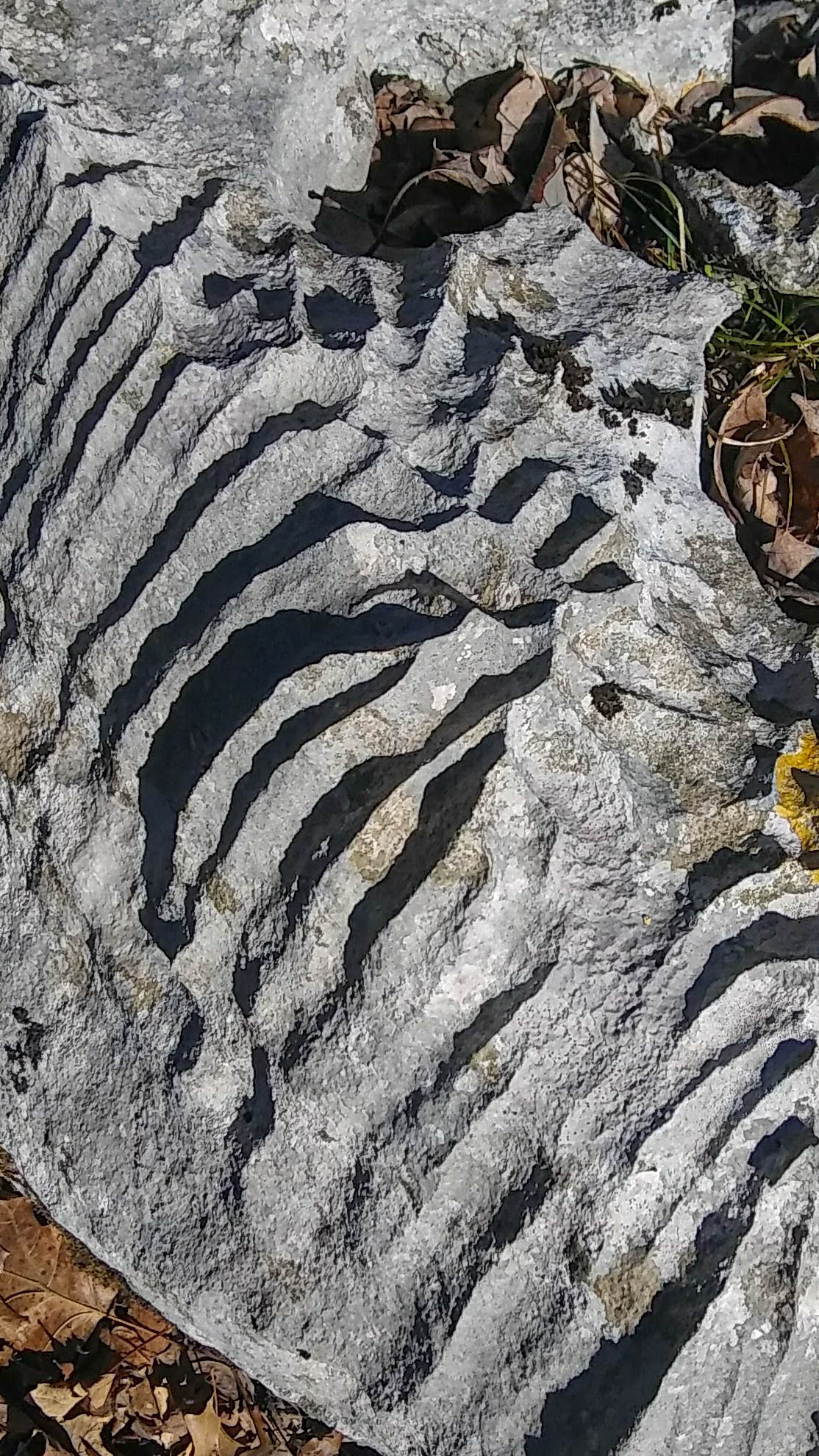
Doesn’t this look like ribs? Or shark gills? No, I’m pretty sure it isn’t a petrified shark! But still, I wonder how these patterns could have come about?

It also bears a resemblance to the cave formations know as bacon, or drapery, but they require an active source of water dripping down among the limestone in a cave.

Found this on the Fanning Trail of the Blevins Gap Nature Preserve in Huntsville, where there are several of such rocks near the Bailey Cove Branch creek.

Posted in Photoblog, Trails, Uncategorized | Tagged , , , , , | Leave a comment

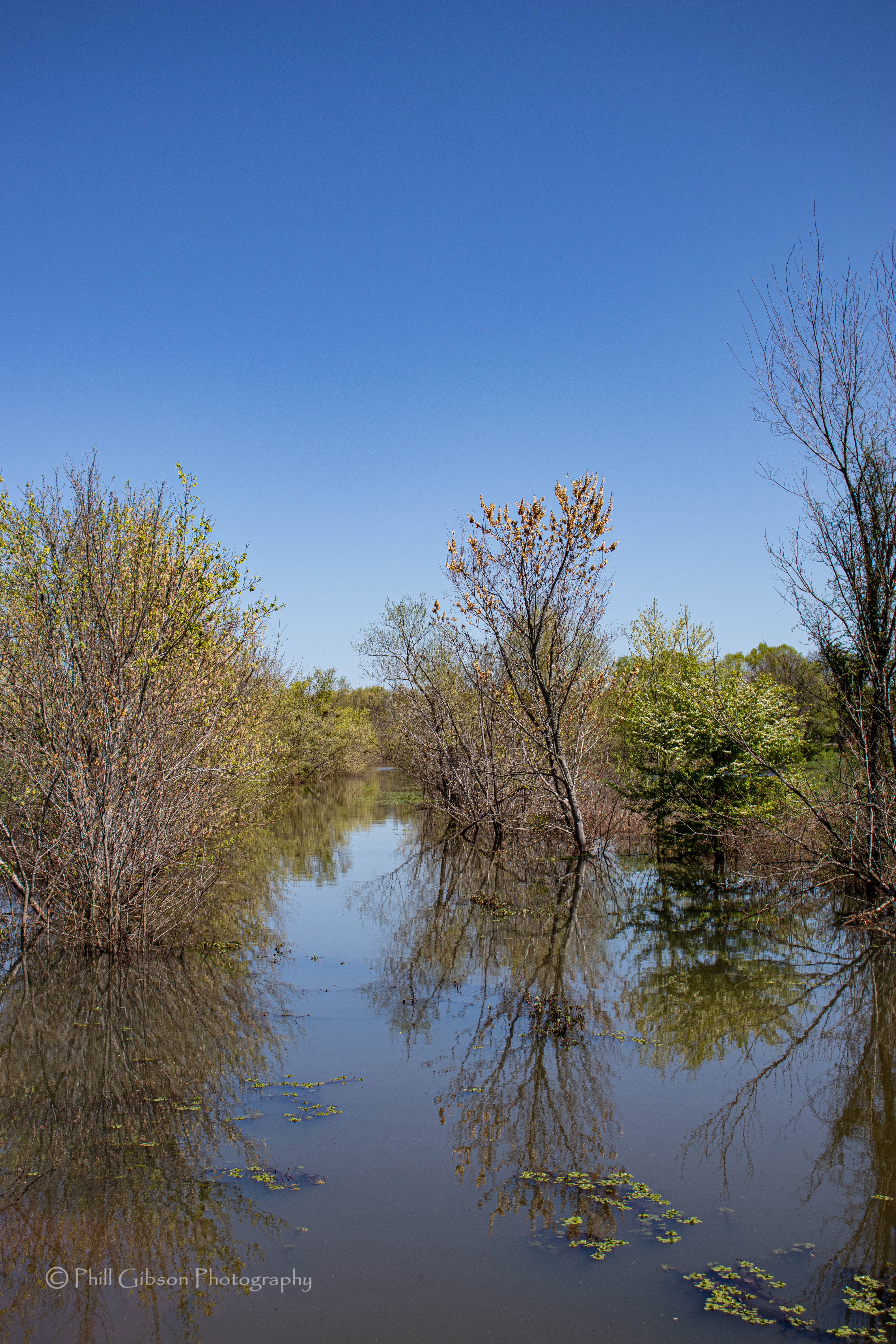
Along the Singing River Trail

Backwaters of the Tennessee River along the first section of the new Singing River Trail.

As stated on their website: “The Singing River Trail is a vision for a long-distance trail in North Alabama that connects our communities, provides active-living opportunities for residents, and spurs further economic development for the region.”

Posted in Photoblog | Tagged , , | Leave a comment

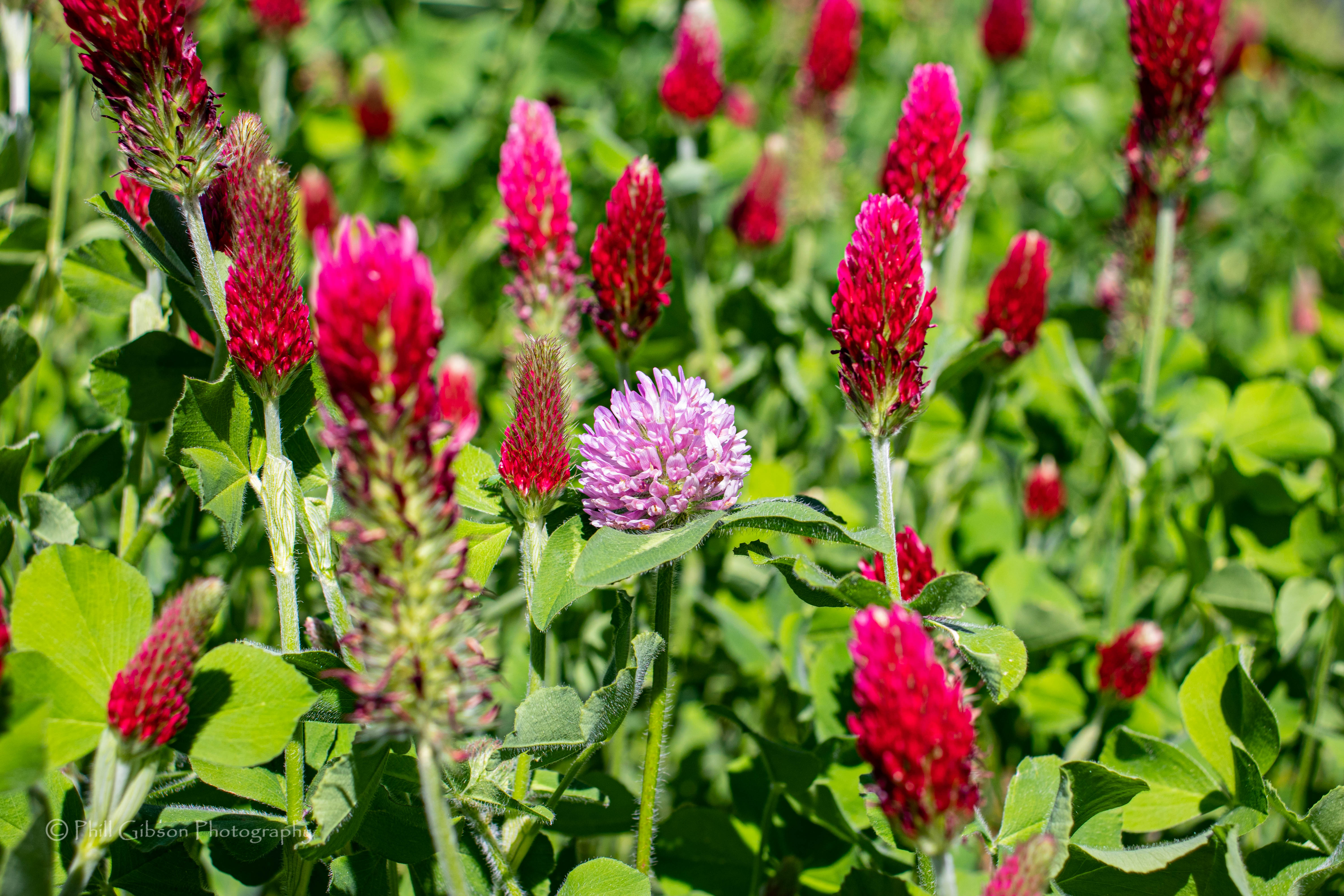
Standing Out Amongst Crimson Clover

Seen along the first section of the new Singing River Trail in North Alabama. Is this pink/lavender bloom also Crimson Clover, or an interloper?

Posted in Photoblog | Tagged , , , | Leave a comment

Awaiting another game

Posted in Photoblog | Tagged , , , | Leave a comment

Should I Always Wear My Finger Picks When Playing the 5-String Banjo?

When I first learned to play the five-string banjo (not the second time), I read the admonitions to always wear your finger picks. I kept to this rather faithfully, but there were a few occasions when I would just pick up the banjo, usually sitting on the couch like a house cat waiting to be petted, and start strumming. This was usually a one-time thing, so no harm done.
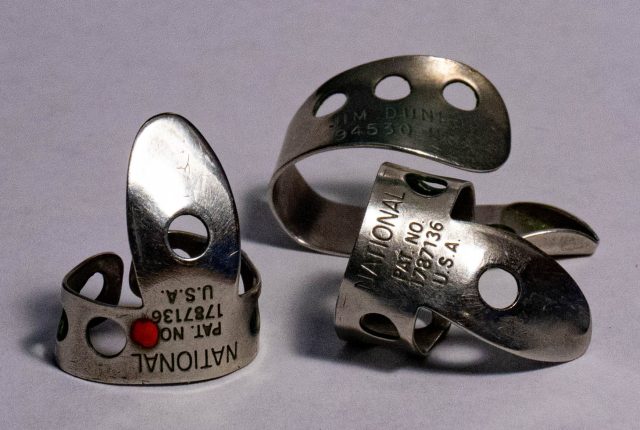
My banjo picks

The worse I ever did however, was to get into the habit of not playing with picks for a couple of weeks. And that is where the difficulty arises, as the loss of skill is very subtle – you won’t ever notice that you can’t play with picks anymore until you try to play with them again. After that amount of time, it was a pretty noticeable and disconcerting feeling.

But it had a happy resolution as it just took like 2 or 3 days of practicing with picks to get back the ability.

So the question is: just how much harm is it to your banjo playing to not use finger picks? Of course, I’m including a thumb pick in this discussion as well; I’m just referring to it as a finger pick for convenience sake. I’m also referring just to ‘modern’ styles: Scruggs, Melodic, and Reno (or single-string) styles. Clawhammer and Two-finger styles do not use picks on purpose.

You have heard the adage about how you can break the rules after you learn why the rule is there in the first place? I think it certainly applies here, and the lesson-learned for me after that two-week pick-less stint demonstrated to me why the rule is there. The take-home for me was this:

You can indeed play without finger picks, but do not expect yourself to be able to tell when enough is enough – you cannot perceive any changes in your ability to play with or without picks without switching back. Because you can’t perceive it, you’ll have to limit your pick-less playing to only occasionally and then just for short periods of time. Any more and you can really start to get comfortable with the feel of no picks.

But that brings up perhaps the more relevant question of why you want to play without picks. For me as a young banjo player, it was simply a matter of convenience and the occasional lack of self-discipline.

For others, it may be an underlying issue. Maybe the picks aren’t fitted properly, or they are being worn incorrectly, or they are painful, or any number of other reasons. At that point, it’s advisable to ask a banjo teacher. Hopefully, he or she can set you up and get you back on the way to gainful practice!
Posted in Beginning Banjo, Teaching, Tips & Techniques | Tagged , , , | 2 Comments

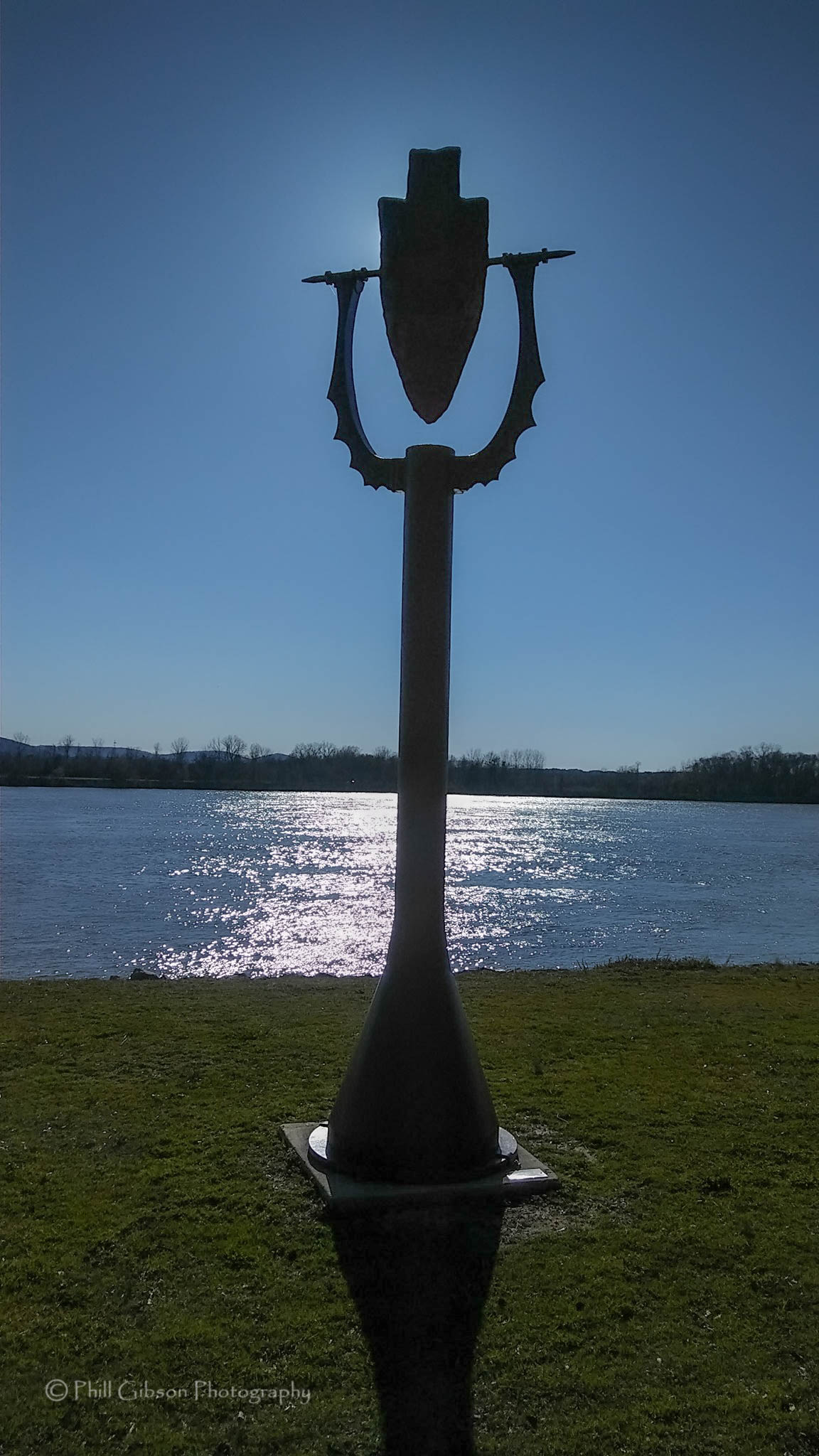
Early Home Defense

Trail Art along the Tennessee River at Ditto Landing, Huntsville, Alabama. “Early Home Defense” is indeed the name on the small plate at the base of this piece.

Posted in Photoblog | Tagged , , , | Leave a comment

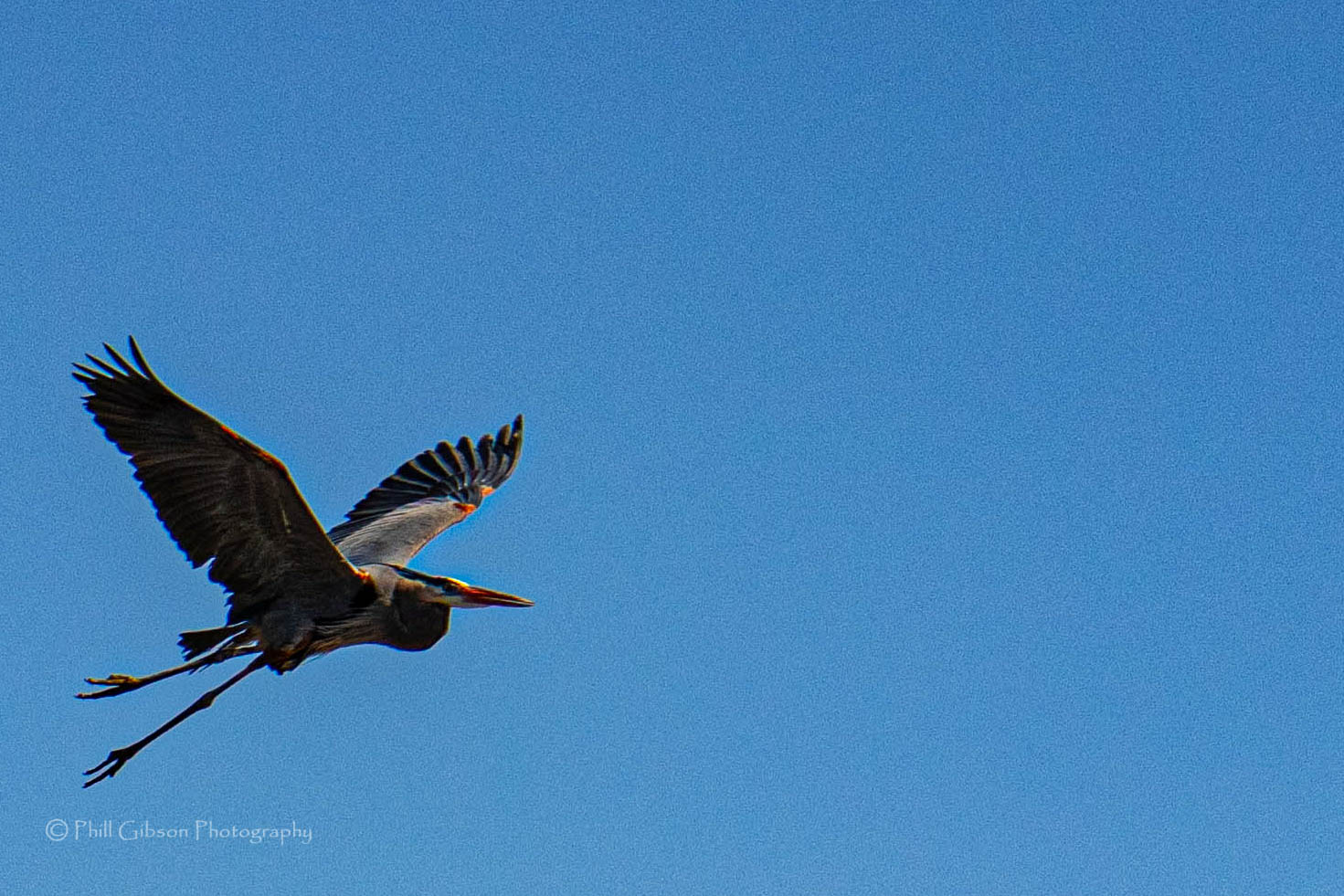
Great Blue Heron

Posted in Photoblog | Tagged , | Leave a comment

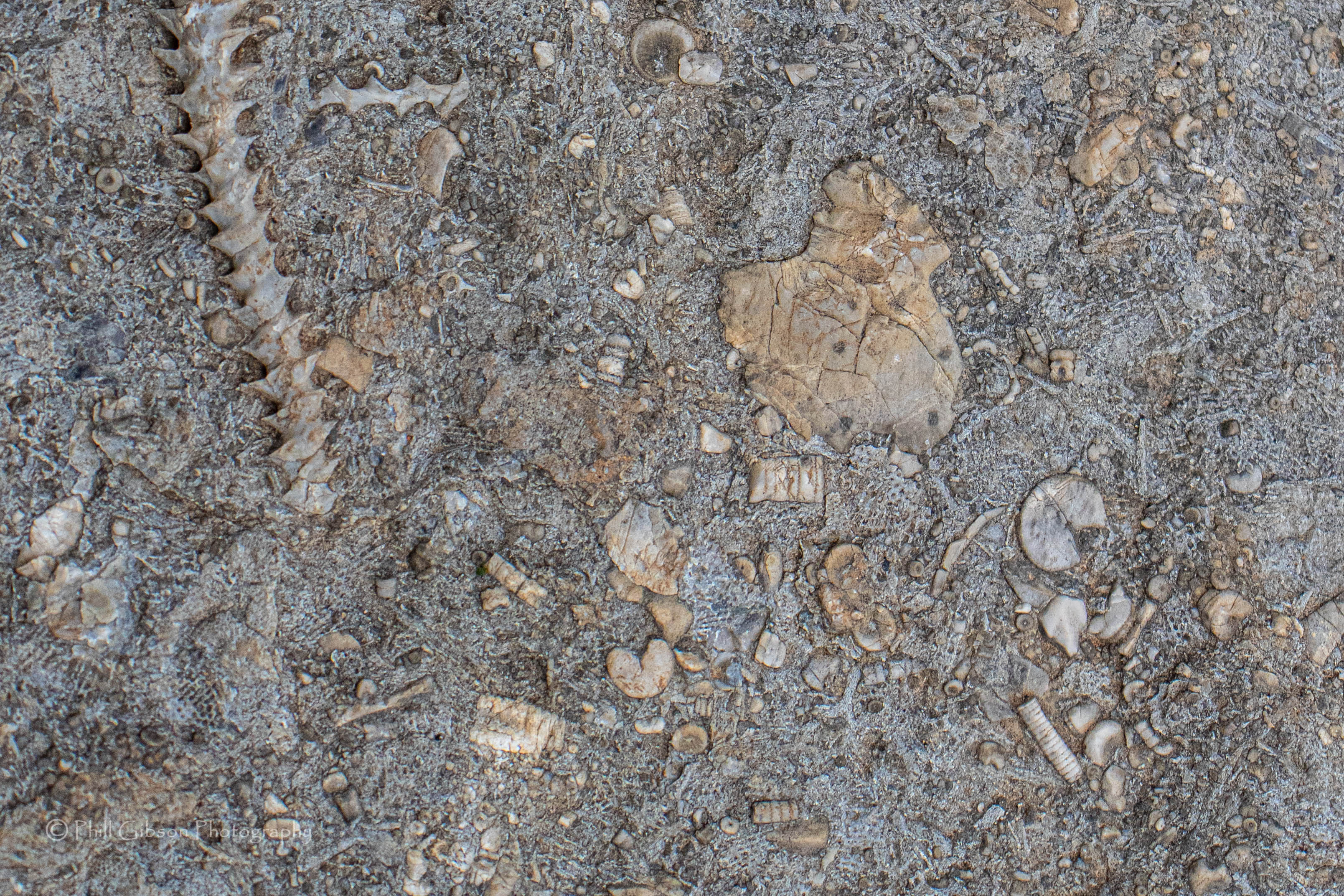
Fossils in Limestone

These fossils are fairly common around the Cumberland Plateau of the southern U.S. This photo spans about 2 inches across. If you look closely, you’ll see almost everything in the photo is a fossil!

Posted in Photoblog | Tagged , , | 2 Comments

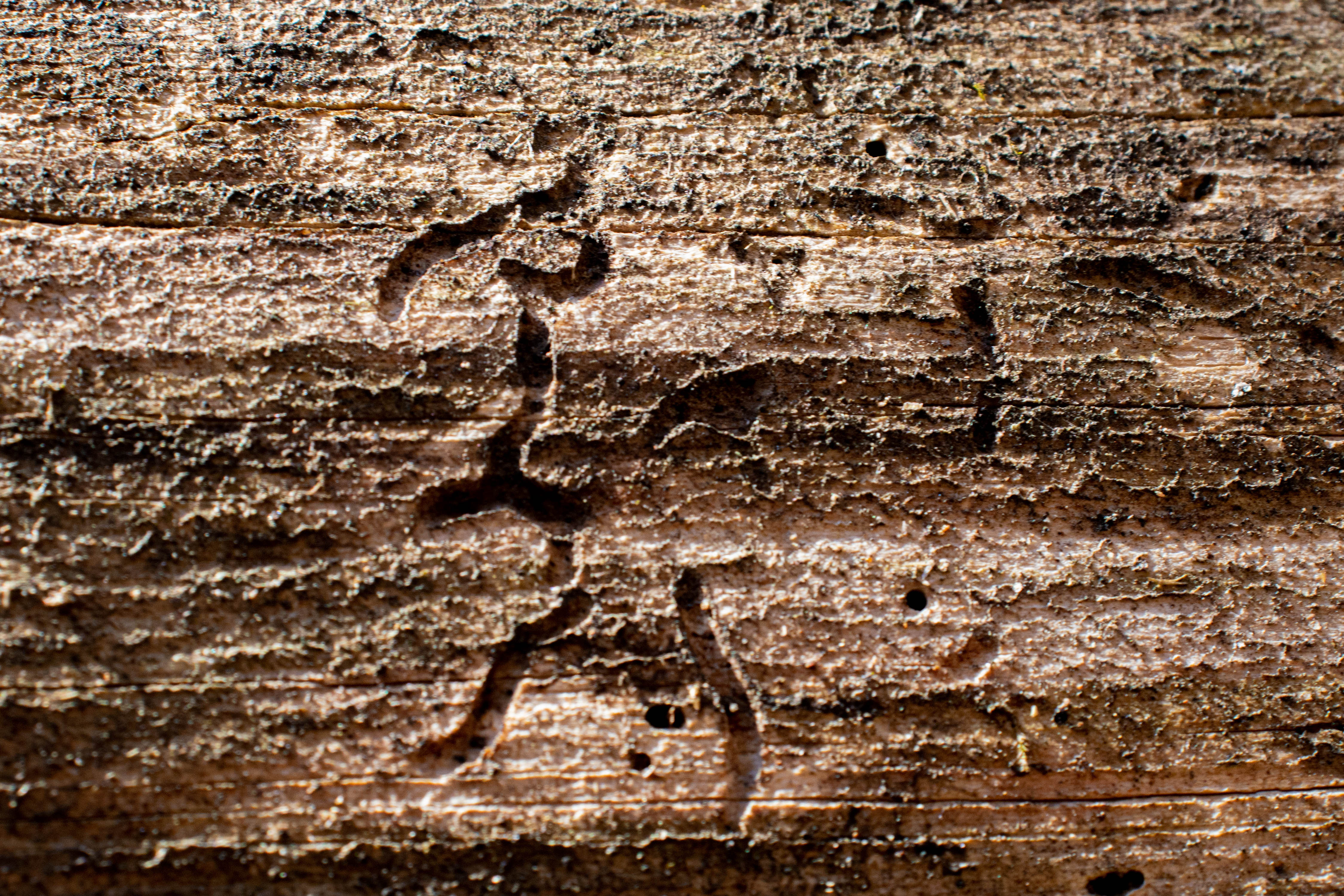
Which is it?

I did this photo some time back.

I can’t remember, though – is this a pine bark beetle larvae eating its way through a fallen pine tree, or is it an ancient etching of a large flightless bird?


Hmm…

Posted in Photoblog | Tagged , , | Leave a comment

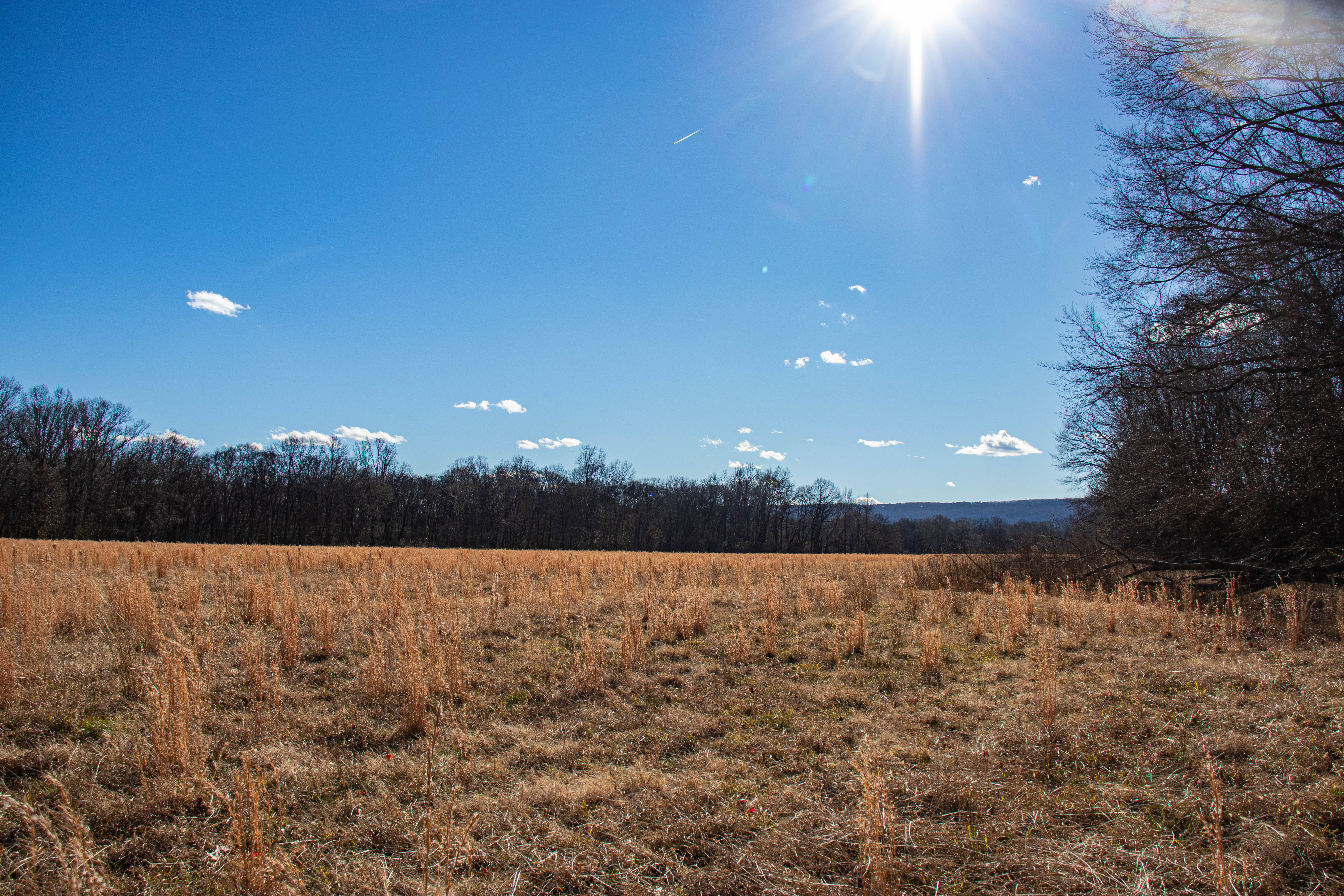
The Sedge Field at Goldsmith-Schiffman Nature Preserve

I’ve not done much with the interplay of sun and lens, but I think this turned out well.

This photo was taken in winter, 2020. Most of the sedge field is actually around the bend to the right and is big enough to get seriously turned around in momentarily! There are several small creeks and marshy areas that prevent straight line walking. A fascinating preserve on the eastern edge of Huntsville, Alabama.

Posted in Photoblog | Tagged , , | Leave a comment